
Table of Contents
- Your Thermostat Fan Is Set to “ON” Instead of “AUTO”
- A Clogged Air Filter Is Overheating Your Furnace
- Your Electronic Igniter Has Failed (Hot Surface Igniter Breakdown)
- A Dirty Flame Sensor Is Shutting Down Your Burners
- Gas Supply Problems or Valve Failures (Call a Professional Immediately)
- Quick Troubleshooting Guide: DIY or Call a Pro?
- Why Don’t Old Furnaces Do This? A Brief History of HVAC Safety
- Final Thoughts
Picture this: It’s a cold, rainy January evening in Portland. You turn up the thermostat, hear the familiar hum of your furnace kicking on, and wait for that comforting wave of warmth. Instead, you feel cold drafts coming from your vents. Before you panic and assume your heating system has died, take a breath. A furnace blowing cold air doesn’t always mean it’s broken. Many causes are simple fixes you can handle yourself in just a few minutes. In the Portland and Vancouver metro area, where winter temperatures regularly drop into the 30s and natural gas furnaces are the primary heating source for over 50% of homes, a non-functioning furnace is more than an inconvenience—it’s a potential safety hazard. Frozen pipes, uncomfortable living conditions, and skyrocketing emergency repair bills can all result from an unaddressed heating issue. This guide will walk you through the 5 most common reasons your furnace is blowing cold air, help you determine which issues you can fix yourself, and clarify when it’s time to call Sarkinen Heating & Cooling’s certified HVAC technicians. By the end, you’ll have the diagnostic skills to troubleshoot confidently, the knowledge to save money on simple fixes, and the peace of mind that comes from knowing when professional help is necessary.
1. Your Thermostat Fan Is Set to “ON” Instead of “AUTO”
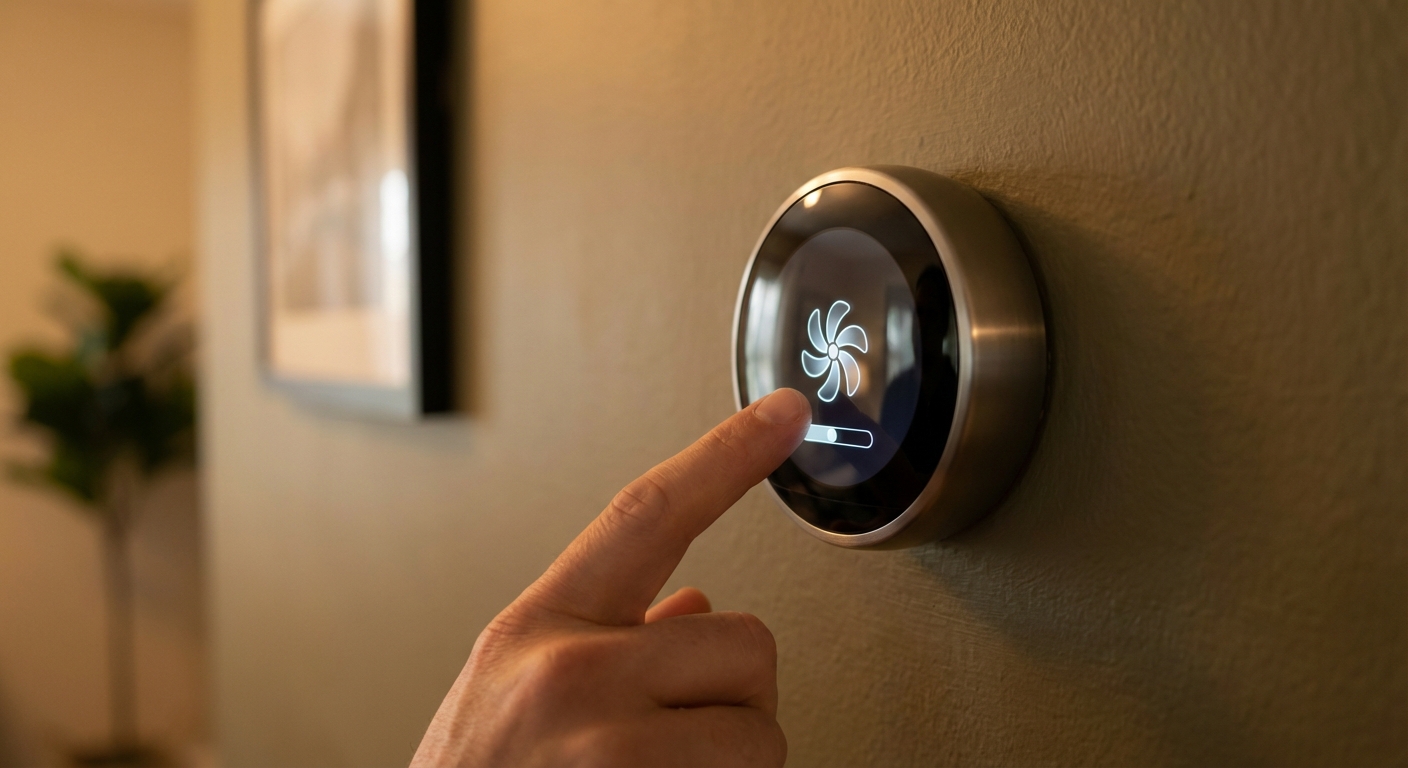
Let’s start with the most common—and most embarrassing—cause of cold air: a simple thermostat misconfiguration. If your thermostat fan setting is switched to “ON,” the blower motor runs continuously, 24 hours a day, even when the furnace burners aren’t actively heating. This circulates unheated air through your home, creating that uncomfortable cold draft. Why does this happen? Homeowners accidentally toggle the fan switch while adjusting the temperature, or they mistakenly believe the “ON” setting provides better air circulation throughout the home. It doesn’t—it just wastes energy and money.
Here’s How to Fix It:
- Walk over to your thermostat and locate the fan setting control
- Make sure it reads “AUTO,” not “ON”
- Verify the mode is set to “HEAT” (not “COOL” or “OFF”)
- Set your desired temperature at least 3-5 degrees higher than the current room temperature to trigger a heating cycle
If your thermostat is correctly set to “AUTO” and “HEAT,” but you’re still getting cold air, it’s time to move to the next diagnostic step.
2. A Clogged Air Filter Is Overheating Your Furnace
Neglected air filters are the leading cause of furnace failures nationwide. This isn’t just about air quality—a severely clogged filter can trigger safety mechanisms that result in your furnace blowing cold air through your vents. Here’s what happens: When an air filter becomes packed with dust, pet hair, and debris, it restricts airflow to the furnace’s heat exchanger. This sets off a dangerous chain reaction.
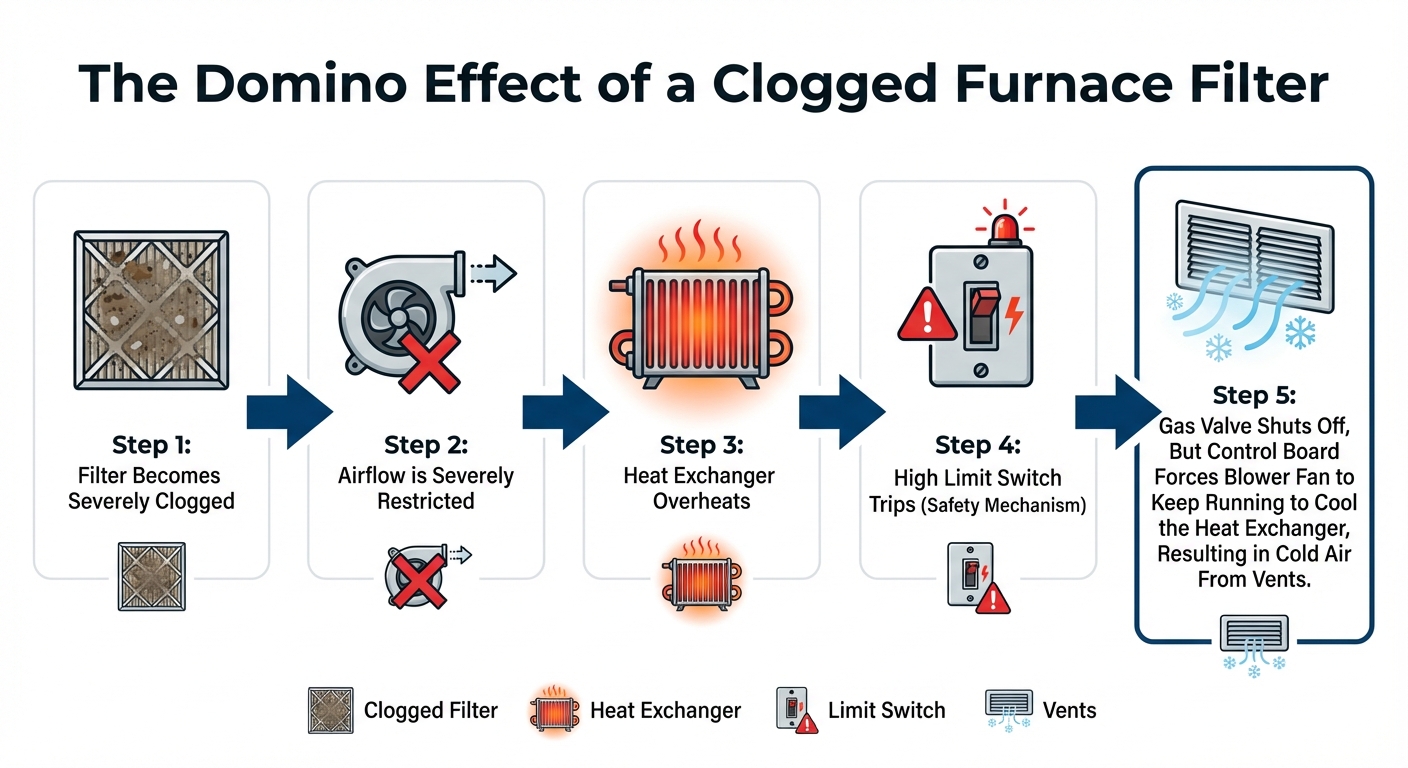
First, the reduced airflow prevents the heat exchanger from transferring heat to the circulating air. The heat exchanger then begins to overheat because it can’t dissipate the heat it’s generating. At this point, the High Limit Switch—a critical safety device—detects the dangerous temperature and trips, immediately shutting off the gas valve and burners to prevent a fire or cracked heat exchanger. However, the furnace’s control board keeps the blower fan running to cool down the overheated heat exchanger. This is the source of that cold air pouring from your vents.
Here’s How to Fix It Yourself:
- Turn off the furnace at the thermostat
- Locate the air filter (usually in a slot near the blower compartment or in a return air vent)
- Remove the filter and hold it up to a light source—if you cannot see light passing through, it’s clogged
- Replace the filter with a new one that matches the size and MERV rating (typically MERV 8-11 for residential systems)
- Perform a hard reset: Turn off the furnace at the circuit breaker for 5 minutes, then turn it back on to reset the limit switch
Maintenance Schedule:
Replace 1-inch filters every 30-60 days during heating season. Thicker 4-inch pleated filters can last 3-6 months but should be checked monthly. In Portland and Vancouver’s damp climate, where dust and allergens are prevalent, err on the side of more frequent replacements. When to call a pro: If replacing the filter and resetting the system doesn’t restore heat, the limit switch itself may have failed and will need professional replacement by Sarkinen Heating & Cooling.
3. Your Electronic Igniter Has Failed (Hot Surface Igniter Breakdown)
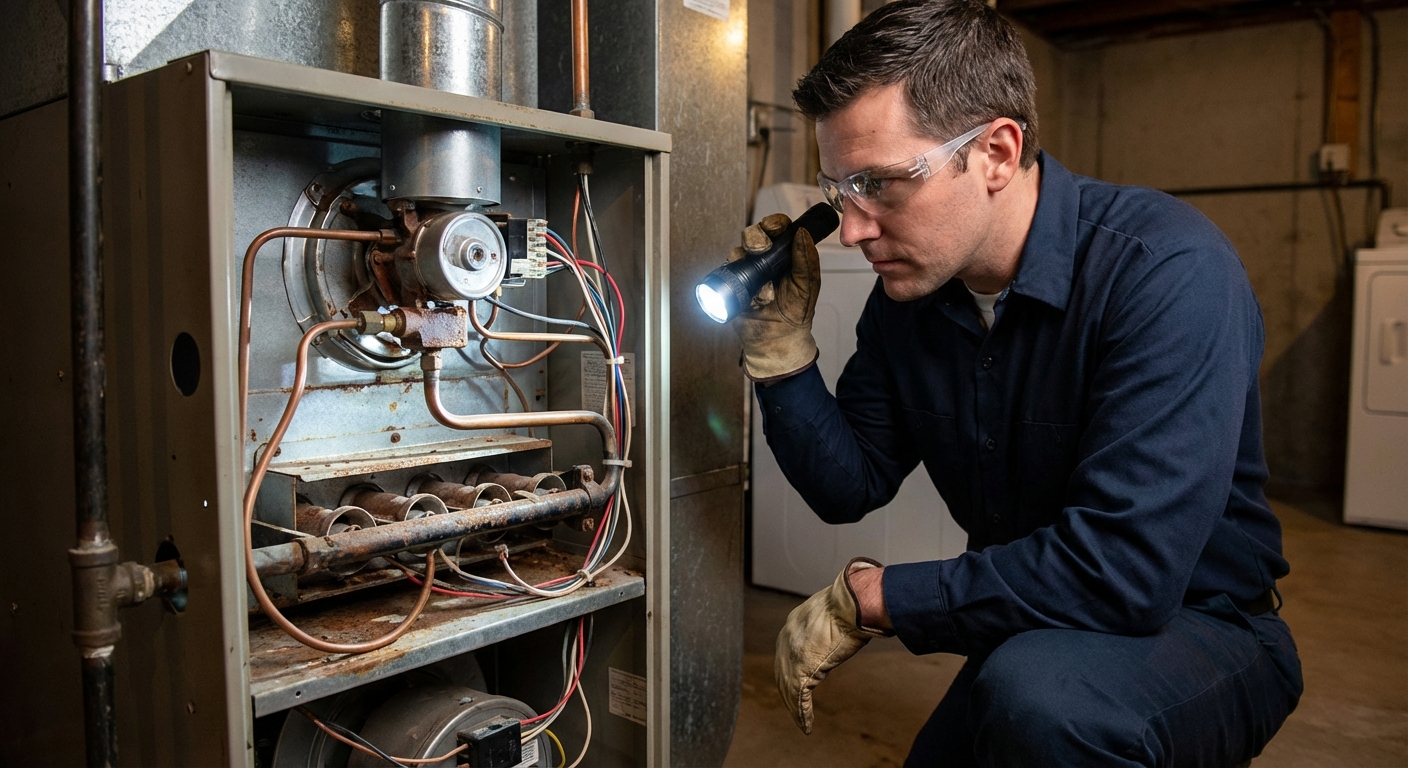
Unlike older furnaces with standing pilot lights, modern systems manufactured after the early 1990s use electronic igniters. This shift was driven by Department of Energy efficiency mandates aimed at reducing energy waste—standing pilots could consume up to 20% of a furnace’s total fuel usage.
How Hot Surface Igniters (HSI) Work:
When your thermostat calls for heat, an electrical current heats a silicon carbide or silicon nitride element to approximately 2,500°F. This extreme heat ignites the natural gas flowing to the burners, starting your heating cycle.
Why They Fail:
Over time—typically after 3-7 years of use—the igniter becomes brittle and develops microscopic cracks. Even tiny fractures can prevent it from reaching ignition temperature. If the igniter fails, the gas valve never opens, the burners never light, and depending on your furnace’s programming, the blower may still run, circulating cold air.
Why This Requires Professional Repair:
- HSIs are extremely fragile—even the oils from human skin can cause premature failure
- Proper diagnosis requires a multimeter to test electrical continuity and voltage (typically 80-120 VAC)
- Replacing the igniter involves working near the burner assembly and gas valve, both hazardous without proper training and tools
As the National Association of Certified Home Inspectors emphasizes: “Hot surface igniters are designed to fail safely, but diagnosing ignition issues requires specialized tools and knowledge of gas furnace sequencing. This is not a DIY repair.”
4. A Dirty Flame Sensor Is Shutting Down Your Burners
The flame sensor is one of the most misunderstood yet critical safety devices in your furnace. This small, rod-shaped probe positioned directly in the path of the burner flame can become coated with carbon buildup, causing your furnace to shut off within seconds of ignition.
Understanding Flame Rectification:
The flame sensor uses a sophisticated safety principle. The sensor rod carries a small alternating current (AC). When the flame is present, it conducts electricity and “rectifies” the AC into direct current (DC) microamps—typically between 0.5 and 3.0 microamps. The furnace’s control board constantly monitors this current. If it detects the expected microamp range, it knows the flame is present and keeps the gas valve open.
The Problem with Carbon Buildup:
Over time, combustion byproducts—primarily soot and carbon—coat the sensor rod. This coating acts as an insulator, preventing the control board from reading the flame signal. The board assumes the flame has gone out (a potentially dangerous situation) and shuts the gas valve within 3 seconds to prevent gas buildup. However, the control board keeps the blower running to purge any residual gas from the combustion chamber. This safety purge results in cold air flowing through your vents.
DIY vs. Professional Approach:
Some handy homeowners can safely turn off the furnace, access the burner compartment, remove the flame sensor, and clean it with fine-grit sandpaper or a soft abrasive pad. However, this requires confidence working around gas appliances and electrical components. Improper reinstallation or over-cleaning (which can scratch away the conductive surface) can damage the sensor. A certified HVAC technician from Sarkinen Heating & Cooling will clean the sensor, test it with a microamp meter to ensure it’s reading within specifications, and inspect the gas valve and control board to rule out more serious issues. When to call a professional: If you’ve cleaned the sensor and the problem persists, the gas valve itself may be failing, or the control board could be malfunctioning. Both scenarios require professional diagnosis with specialized equipment.
5. Gas Supply Problems or Valve Failures (Call a Professional Immediately)
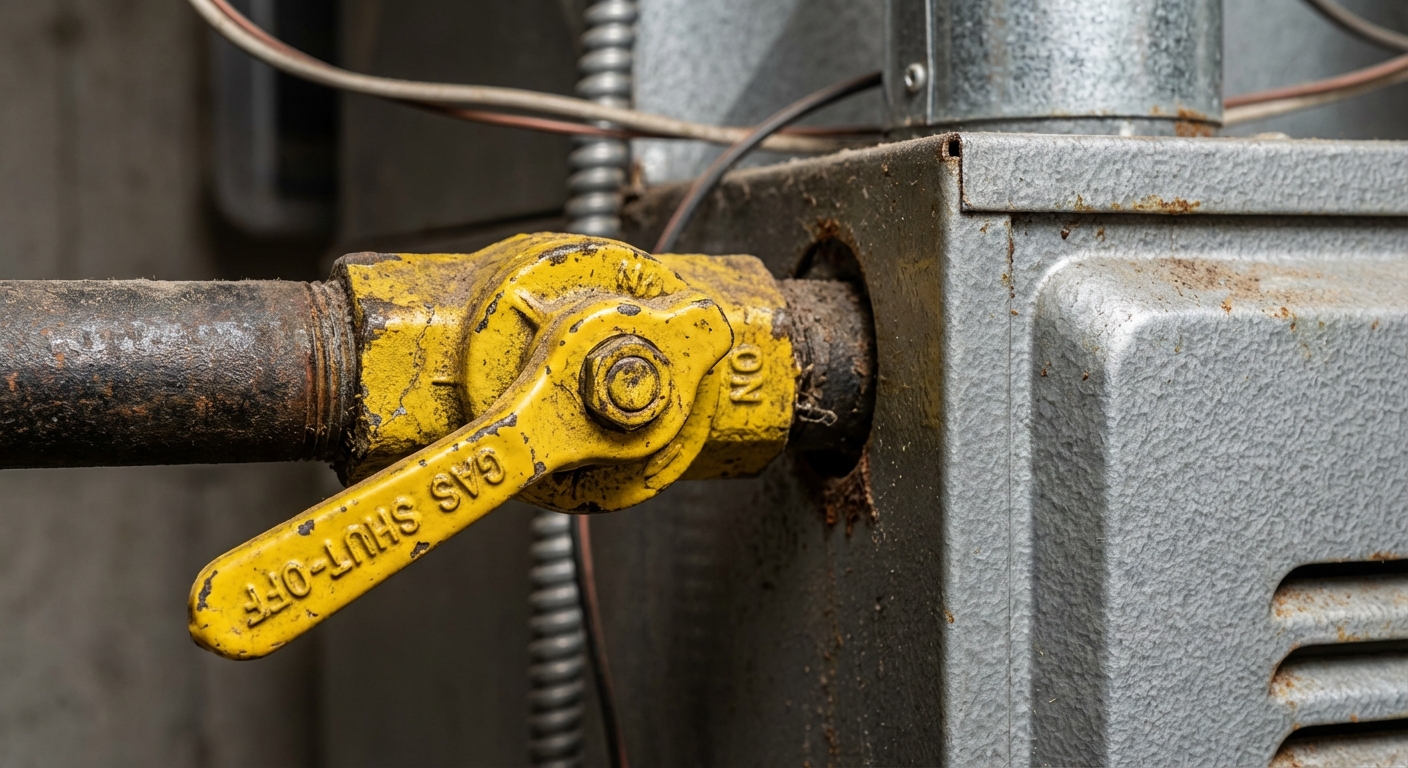
If your furnace has no gas supply, it cannot produce heat, plain and simple. Any suspected gas issue is a safety emergency requiring immediate professional intervention.
Potential Gas Supply Issues Include:
- Closed manual gas valve: The gas shut-off valve (usually a yellow or red lever near the furnace) may have been accidentally turned off during maintenance or renovations
- Utility interruption: Natural gas service interruptions can occur due to utility work, pipeline issues, or service disconnection
- Internal gas valve failure: The electronically controlled gas valve inside the furnace may have failed in the “closed” position
The symptom: The furnace will run through its startup sequence—the blower may activate—but the burners never ignite. You may hear clicking sounds as the igniter attempts to function, but no flame appears.
🚨 WARNING SIGNS OF A GAS LEAK:
- A strong sulfur or “rotten egg” smell (natural gas is naturally odorless, but utilities add mercaptan specifically for leak detection)
- A hissing sound near the gas line or furnace
- Dead or discolored vegetation near outdoor gas meters
- Physical symptoms like headaches, dizziness, or nausea
IMMEDIATE ACTION PROTOCOL:
- Do not attempt to relight the furnace or troubleshoot further
- Evacuate the home immediately—do not use light switches, phones, or anything that could create a spark
- Call your utility company’s emergency line from outside the home (NW Natural: 1-800-882-3377 for the Portland/Vancouver area)
- Call Sarkinen Heating & Cooling for emergency HVAC service once the utility has cleared the home as safe
Why this requires a professional: Working with natural gas systems requires specialized certification, tools like combustion analyzers and manometers, and thorough knowledge of local building codes. Attempting DIY repairs on gas systems can result in carbon monoxide poisoning, fire, or explosions. This is never worth the risk.
Quick Troubleshooting Guide: DIY or Call a Pro?
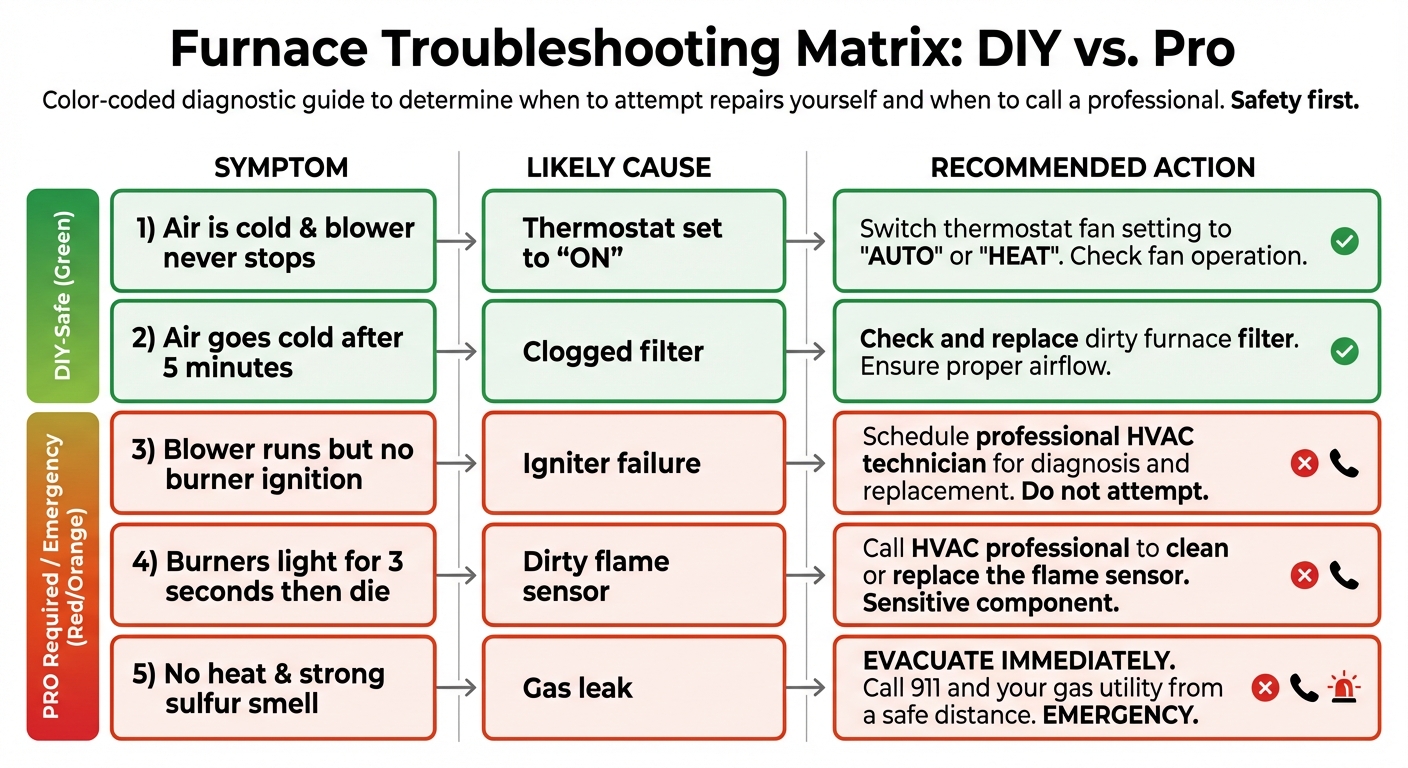
Use this quick-reference guide to match your symptoms to the most likely cause and determine whether you can safely troubleshoot the issue yourself or should call Sarkinen Heating & Cooling’s certified technicians.
Why Don’t Old Furnaces Do This? A Brief History of HVAC Safety
If you’re frustrated by your modern furnace blowing cold air during a malfunction, you might wonder why older furnaces didn’t have this problem. Understanding this evolution explains why modern systems behave the way they do—and why it’s actually a good thing.
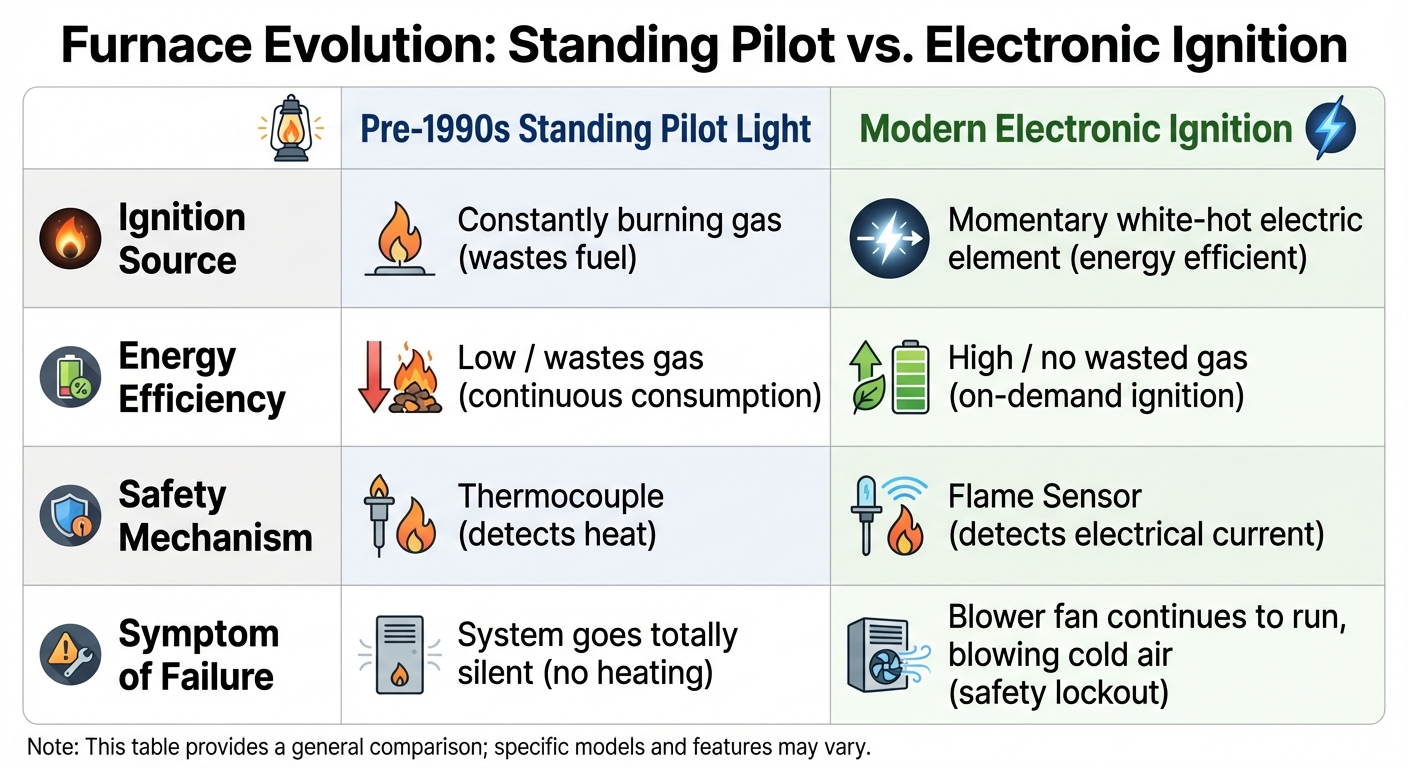
The Old Way:
Furnaces manufactured before the 1990s typically used standing pilot lights—a small, continuously burning flame that ignited the main burners. If a standing pilot went out due to drafts or thermocouple failure, the entire furnace simply stopped functioning. No burner meant no blower, which meant no air circulation. The furnace went completely silent.
The Modern Approach:
Electronic ignition systems introduced in the 1990s (driven by DOE efficiency mandates) include multiple layers of safety:
- Flame sensors that shut off gas in milliseconds if flame is not detected
- High limit switches that prevent heat exchanger damage
- Post-purge blower operation that clears combustion chambers and cools overheated components
Why This Causes Confusion:
The modern furnace’s programming to keep the blower running during safety shutdowns creates the symptom of cold air circulation—a phenomenon unfamiliar to homeowners accustomed to older systems that simply went silent when they failed.
Final Thoughts
A furnace blowing cold air is alarming, especially on a freezing Portland or Vancouver evening. But as we’ve explored, it’s often a symptom of a fixable problem, not a catastrophic failure requiring a complete system replacement. The power of prevention cannot be overstated. Heating accounts for approximately 42% of a home’s energy costs, making your furnace not just a comfort device but a significant financial investment. Annual professional tune-ups can extend equipment life by up to 20% and prevent those dreaded mid-winter breakdowns that always seem to happen at the worst possible time.
Recap the DIY-Safe Fixes:
- Check your thermostat settings (AUTO mode, HEAT setting)
- Replace air filters monthly during heating season
- Perform a hard reset if the limit switch has tripped after filter replacement
Know When to Call Sarkinen Heating & Cooling:
If you’ve tried the DIY steps and still have cold air, or if you encounter any of these red flags, contact us immediately:
- Smell of gas or sulfur
- Carbon monoxide detector alarm
- Repeated system lockouts
- Burners that light but shut off within seconds
- Any unusual sounds, smells, or visible damage to furnace components
Ready to Get Your Heat Back?
Serving Portland, Vancouver, and the surrounding Pacific Northwest communities, Sarkinen Heating & Cooling’s certified technicians are available for same-day emergency service. Don’t spend another cold night without heat.
Call us at (360) 940-0305 for Vancouver or (503) 606-8419 for Portland
A well-maintained furnace isn’t just about comfort—it’s about safety, efficiency, and peace of mind. Stay warm, Portland and Vancouver!
References:
- U.S. Energy Information Administration. (2023). Use of Energy in Homes – Heating. https://www.eia.gov/energyexplained/use-of-energy/homes.php
- U.S. Department of Energy. (2023). Furnaces and Boilers. https://www.energy.gov/energysaver/furnaces-and-boilers
- U.S. Department of Energy. (2023). Maintaining Your Air Conditioner / HVAC System. https://www.energy.gov/energysaver/maintaining-your-air-conditioner
- Energy Trust of Oregon. (2024). Heating and Cooling: Residential Energy Savings. https://www.energytrust.org/residential/heating-and-cooling/
- U.S. Environmental Protection Agency / Energy Star. (2024). Proper Use Guidelines for Programmable Thermostats. https://www.energystar.gov/products/heating_cooling/programmable_thermostats
- International Association of Certified Home Inspectors. (2023). Furnaces and Home Inspections: The Flame Sensor. https://www.nachi.org/furnaces-home-inspections.htm
- U.S. Environmental Protection Agency / Energy Star. (2023). Heating & Cooling Campaign: Maintenance. https://www.energystar.gov/campaign/heating_cooling