
Table of Contents
It’s 95°F outside, your AC is humming away, but your home feels like a sauna. What’s going on? If you’re experiencing this frustrating scenario, you’re not alone. An air conditioner that runs without cooling indicates a critical failure in the heat transfer process—and it’s a problem that’s become increasingly common across the Pacific Northwest. Between 2011 and 2021, the Portland metro area (which includes Vancouver, WA) saw AC adoption skyrocket from roughly 44% of households to nearly 80%. This dramatic shift wasn’t just about comfort—it was driven by climate reality.
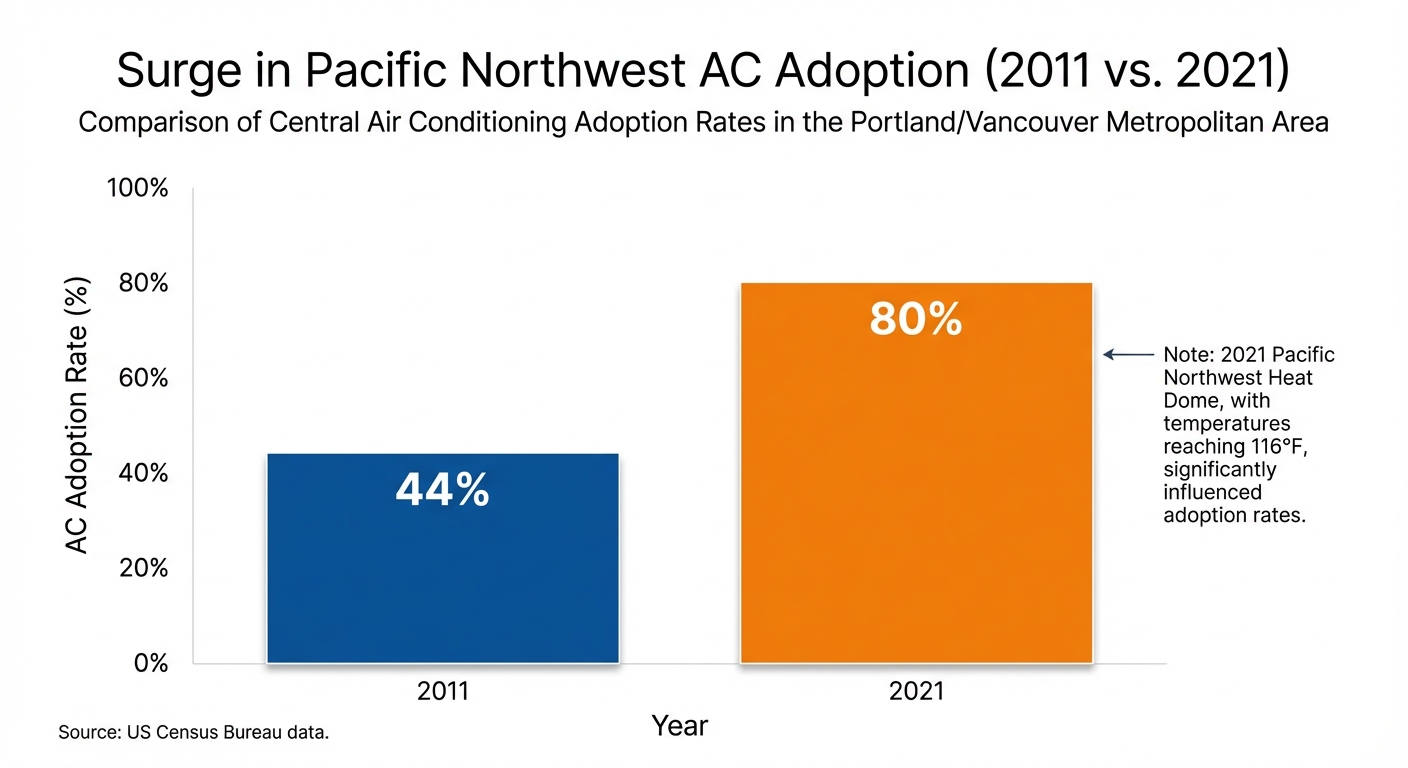
The June 2021 Heat Dome, which pushed temperatures to a record-breaking 116°F, transformed air conditioning from a luxury to a health necessity in our region. At Sarkinen Heating & Cooling, we’ve been diagnosing and repairing these exact AC failures for years across the Vancouver and Portland metro area. We understand the urgency when your cooling system fails during a heat wave. In this guide, we’ll walk you through the three most common mechanical failures that cause this problem, explain the science behind each one, and show you when it’s time to call in the professionals.
Your AC Doesn’t Make Cold Air—It Moves Heat
Before we dive into what goes wrong, let’s establish a fundamental truth: your air conditioner doesn’t create cold air. Instead, it absorbs heat from inside your home and transfers it outdoors through a sophisticated refrigeration cycle. Understanding this principle is key to recognizing why certain failures occur. The refrigeration cycle operates on basic thermodynamic laws, and when your AC is “running but not cooling,” one of four critical stages has been disrupted.
The Four-Stage Refrigeration Cycle:
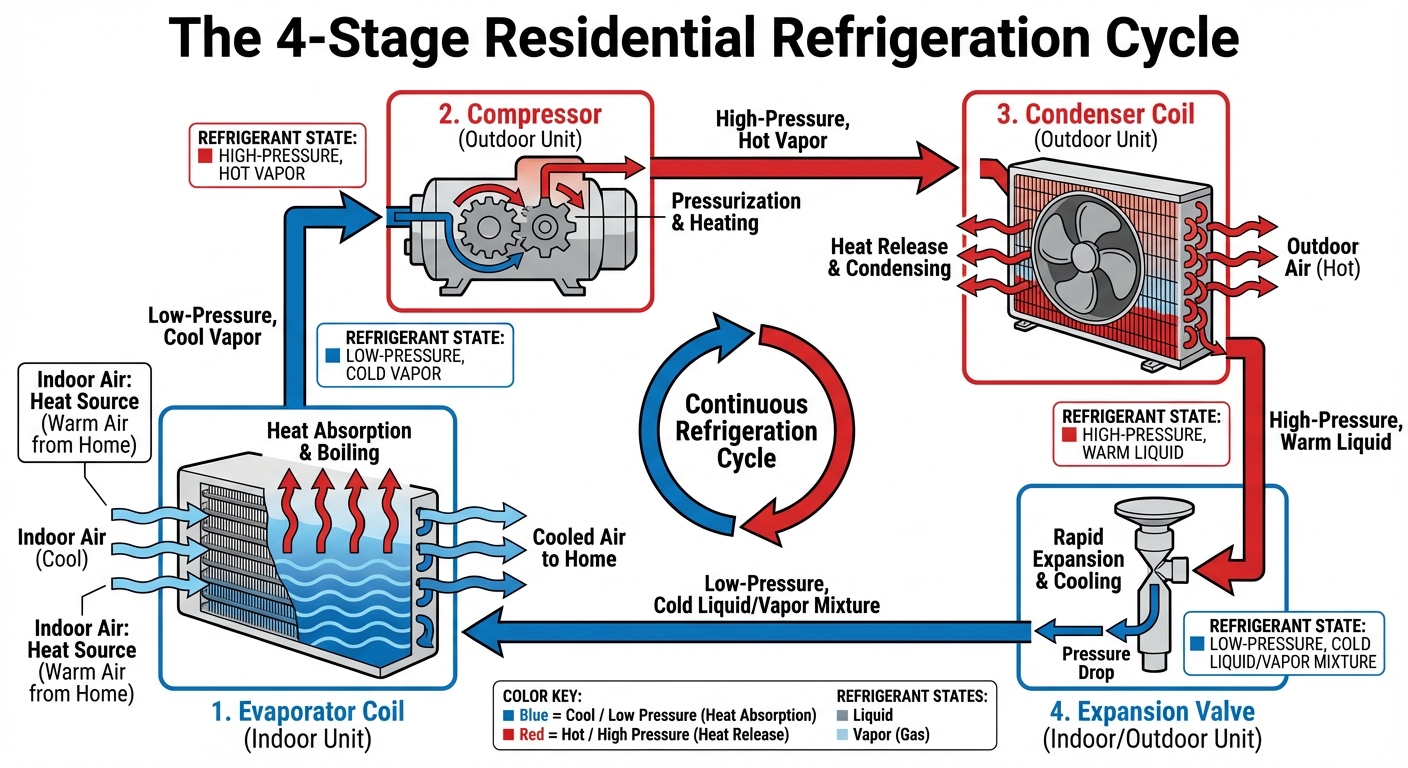
- Heat Absorption: Refrigerant circulates through the evaporator coil (the indoor unit), absorbing heat from the air passing over it. As it absorbs this heat, the refrigerant evaporates from a liquid to a gas.
- Compression: The compressor pressurizes this refrigerant gas, significantly raising both its pressure and temperature. This is the heart of your AC system and the most expensive component to replace.
- Heat Rejection: The hot, pressurized refrigerant flows to the condenser coil (the outdoor unit), where it releases the absorbed heat into the outside air. As it cools, the refrigerant condenses back into a liquid.
- Expansion: An expansion valve lowers the refrigerant’s pressure and temperature before it returns to the evaporator coil to repeat the cycle.
This continuous loop should operate seamlessly as long as all components function properly. When you hear your AC running but feel no cool air, it means this cycle has been interrupted. The blower motor might be pushing air through your vents, but the refrigerant isn’t absorbing heat effectively—or at all.
💡 Why This Matters: Understanding this cycle helps you recognize that problems like frozen coils or refrigerant leaks aren’t simple fixes you can handle with a screwdriver and good intentions. They require professional diagnosis and repair by EPA-certified technicians who understand the complex interplay of pressure, temperature, and airflow.
The Silent Killer: Refrigerant Leaks
Refrigerant leaks represent one of the most deceptive AC failures because the symptoms seem counterintuitive. You might think low refrigerant would make your system blow warm air, but the reality is far more complex—and potentially damaging.
The Science Behind Refrigerant Leaks
Refrigerant operates in a closed-loop system and should never run out or need “topping off” under normal circumstances. If your technician tells you the refrigerant is low, you have a leak—period. This isn’t like adding oil to your car; it’s a sign of system failure. When refrigerant pressure drops due to a leak, something unexpected happens: the evaporator coil becomes too cold. According to Gay-Lussac’s Law of thermodynamics, a drop in pressure results in a corresponding drop in temperature. This causes the coil to freeze moisture from the air, encasing itself in ice and blocking any further heat absorption. Your AC keeps running, but it can’t cool your home because the ice barrier prevents warm air from contacting the refrigerant-filled coils.
Environmental and Legal Considerations
The Environmental Protection Agency strictly regulates refrigerants due to their environmental impact. The older standard, R-22 (commonly known as Freon), was completely phased out in 2020 because of its ozone-depleting properties. Modern systems use R-410A or newer refrigerants like R-32.
⚠️ Important Legal Note: You cannot legally or safely recharge your own refrigerant. Handling these chemicals requires EPA Section 608 certification. This isn’t just bureaucratic red tape—these refrigerants operate under extreme pressures and can cause severe injury if mishandled. Additionally, releasing refrigerant into the atmosphere carries significant fines.
Warning Signs of a Refrigerant Leak
Watch for these telltale indicators:
- Ice forming on the evaporator coil or refrigerant lines
- Hissing or bubbling sounds near the indoor or outdoor unit
- Higher-than-normal energy bills as the system runs constantly without effectively cooling
- Reduced airflow from vents
- The outdoor unit running but no cool air inside
The Hidden Cost of Refrigerant Leaks
Beyond the immediate discomfort, refrigerant leaks create a cascade of problems. Research from Pacific Northwest National Laboratory found that a 20% refrigerant undercharge reduces cooling capacity by 20% and electrical efficiency by 21%, while drastically increasing compressor operating temperature. This means your system isn’t just failing to cool your home—it’s wasting massive amounts of electricity and actively damaging the compressor, which can shorten system lifespan by 20-30%. A slow leak that goes undetected for months can turn a relatively simple repair into a complete system replacement. The compressor, forced to work harder without adequate refrigerant, will eventually overheat and fail catastrophically. Replacing a compressor typically costs $1,500-$3,000, and at that price point, many homeowners opt to replace the entire system.
When Your AC Freezes Over: The Airflow Problem
If refrigerant leaks are the silent killer, frozen evaporator coils from restricted airflow are the most common culprit. This is the issue homeowners are most likely to encounter—and the one with the simplest initial troubleshooting step.
The Mechanism of Airflow Restriction
Your AC requires constant airflow of warm indoor air over the evaporator coil. This warm air serves two purposes: it provides heat for the refrigerant to absorb, and it keeps the coil temperature above freezing. When airflow is restricted, the refrigerant drops below freezing point, and condensation from the air freezes onto the coil surface.
The Most Common Causes
By far, the number one culprit is a clogged air filter. Most homeowners forget about their air filters until there’s a problem. That innocent-looking disposable filter works hard, trapping dust, pet dander, pollen, and other airborne particles. Over time, this debris accumulates and creates a barrier that blocks airflow. Other common causes include:
- Blocked or closed supply vents (furniture placed over vents, closed registers in unused rooms)
- Failing blower motor that can’t generate adequate airflow
- Dirty evaporator coils from years of dust buildup
- Collapsed or disconnected ductwork
The Efficiency Impact
The U.S. Department of Energy reports that replacing a dirty, clogged filter with a clean one can reduce your AC’s energy consumption by 5-15%. That’s a significant savings, especially during peak cooling season. Yet despite this, filter replacement remains one of the most neglected aspects of home maintenance.
Filter Replacement Guidelines
How often should you replace your air filter? The answer depends on several factors:
- Standard 1-inch filters: Replace every 1-3 months
- Higher-efficiency pleated filters: Check monthly, replace every 3-6 months
- Homes with pets: Replace more frequently (monthly for heavy shedders)
- Households with allergies or respiratory issues: Monthly replacement recommended
- During high-use seasons (summer and winter): Check monthly regardless of filter type
✅ Your First DIY Troubleshooting Step
Before calling for service, check your air filter. Locate your air handler (typically in a closet, attic, or basement), remove the filter, and hold it up to a light. If you can’t see light through it, or if it’s visibly caked with dust and debris, replace it immediately.
After installing a fresh filter, let your system run for a few hours. If ice has already formed on the coils, you’ll need to turn off the AC and let it thaw completely—this can take 24 hours or longer. Don’t try to chip away the ice; you could damage the delicate aluminum fins on the coil.
When to Call a Professional
If you’ve replaced the filter and the problem persists after a full thaw cycle, or if you see ice reforming on the coils, it’s time for expert diagnosis. The issue may be a failing blower motor, dirty evaporator coils that need professional cleaning, or ductwork problems that require specialized equipment to detect and repair. At Sarkinen Heating & Cooling, we use diagnostic tools to measure airflow, temperature differentials, and static pressure throughout your system. These measurements help us pinpoint exactly where the restriction is occurring, whether it’s a hidden duct leak or a motor operating at reduced capacity.
The Outdoor Unit Matters: When Your Condenser Can’t Breathe
While most homeowners focus on the indoor components of their AC system, the outdoor condenser unit plays an equally critical role. When it can’t perform its job of heat rejection, your entire system fails—even if everything inside your home appears to be working.
The Condenser’s Critical Job
The outdoor unit houses two vital components: the compressor (which pressurizes the refrigerant) and the condenser coils (which release absorbed heat into the outside air). Think of it as the exhaust system for your AC. No matter how well your indoor unit absorbs heat, if the outdoor unit can’t expel that heat, the system becomes overwhelmed and shuts down.
Pacific Northwest-Specific Challenges
Our region’s lush vegetation creates unique threats to outdoor AC units. Unlike arid climates where dust is the primary concern, we face:
- Pine needles that accumulate in condenser fins
- Cottonwood seeds (particularly heavy in late spring) that create dense mats over the coils
- Fallen leaves in autumn that block airflow
- Grass clippings from lawn mowing that get sucked into the unit
- Moss and algae growth in our damp climate
- Blackberry vines and other aggressive plants that can grow around and into the unit
The Consequence of a Blocked Condenser
When the condenser coils are blocked by debris, the system cannot reject heat effectively. The refrigerant remains hot after passing through the condenser, and when it returns to the evaporator coil, it can’t absorb additional heat. Meanwhile, the compressor continues to work harder, generating more heat as it struggles against the blockage. Eventually, one of two things happens: the high-pressure safety switch trips (shutting down the system), or the compressor overheats and suffers catastrophic mechanical failure. A failed compressor often means replacing the entire outdoor unit or even the complete system, depending on the age and refrigerant type.
Homeowner Maintenance Checklist
The Department of Energy recommends maintaining a minimum 2-foot clearance around your outdoor unit. Here’s what you can safely do:
- Clear debris regularly: Remove leaves, pine needles, and vegetation within 2 feet of the unit
- Gentle cleaning: Using a garden hose on a gentle setting (never high-pressure), spray the condenser fins from top to bottom to remove surface debris
- Check the unit’s level: The condenser should sit level on its pad. Settling or shifting can cause refrigerant flow issues
- Listen for unusual sounds: Grinding, rattling, or screeching noises indicate motor or compressor problems requiring professional attention
- Trim surrounding vegetation: Keep plants, shrubs, and grass trimmed back to maintain proper clearance
What Requires Professional Service
While you can handle basic debris removal, condenser coils require specialized cleaning solutions and techniques for deep cleaning. The fins are extremely delicate—even slight bending can reduce airflow significantly. Professional maintenance includes:
- Deep cleaning of both condenser and evaporator coils using commercial-grade coil cleaners
- Refrigerant pressure testing to ensure proper charge
- Electrical component inspection for signs of wear or failure
- Lubrication of motors and bearings
- Straightening bent condenser fins with specialized tools
- Checking for proper refrigerant superheat and subcooling
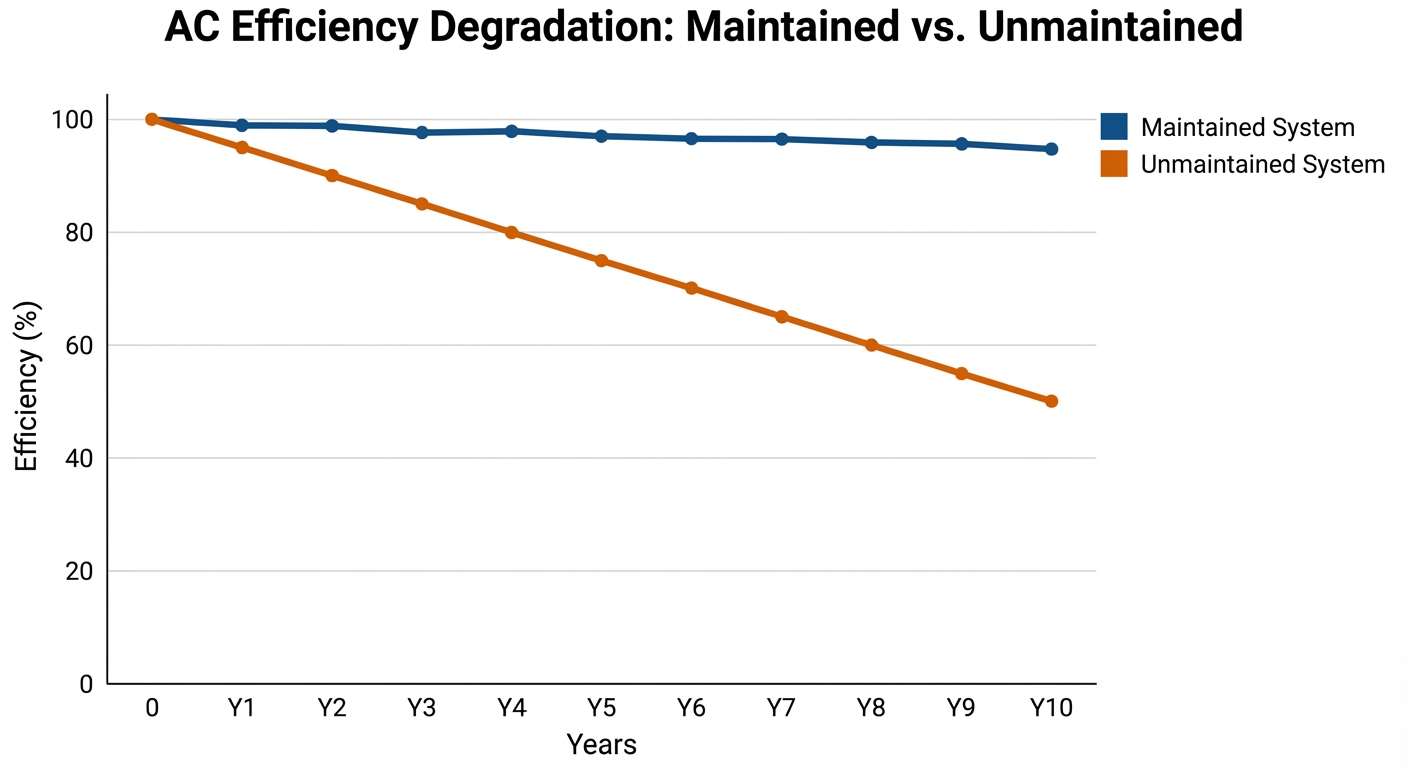
Research from the American Society of Heating, Refrigerating and Air-Conditioning Engineers shows that AC systems lose approximately 5% efficiency annually without proper coil cleaning and filter maintenance. Over five years, that’s a 25% reduction in efficiency—meaning you’re paying significantly more to cool your home while getting less effective cooling.
Pay Now or Pay (Much More) Later: The True Cost of Skipping Maintenance
Most homeowners fall into one of two categories when it comes to HVAC maintenance: those who schedule regular preventative service, and those who only call when something breaks. The data overwhelmingly supports the preventative approach, both financially and in terms of system longevity.
The Two Approaches Compared
Preventative Maintenance: Regular annual tune-ups, seasonal filter replacements, routine inspections, and addressing minor issues before they become major failures.
Reactive Emergency Repair: Calling for service only when the system fails completely, typically during the worst possible time—the hottest days of summer.
Cost-Benefit Analysis
| Metric | Preventative Maintenance | Reactive Emergency Repair |
|---|---|---|
| System Lifespan | Reaches manufacturer expectations (15-20 years) | Reduced by 20-30% due to compounding wear on compressors |
| Energy Efficiency | Maintains 95% of original efficiency over first decade | Drops 5% annually without coil cleaning/filter replacement |
| Long-Term Costs | Predictable annual costs ($150-$300/year for tune-ups) | Exponentially higher (compressor replacement: $1,500-$3,000; full R-410A recharge: $500-$1,500) |
| Emergency Failures | Rare, typically caught before catastrophic failure | Common, often during peak demand when service is most expensive |
A Real-World Scenario
Consider a homeowner who skips annual maintenance for five years, saving $750-$1,500 in upfront costs. During that time, their system’s efficiency degrades by 25%, costing them an additional $100-$200 per year in electricity. After five years, they’ve actually lost money compared to the maintenance costs. But the real financial hit comes when major component failure strikes. A refrigerant leak that’s been slowly worsening for years might require not just recharging the system ($500-$1,500) but also replacing damaged compressor components ($1,500-$3,000). Suddenly, that $1,500 in “saved” maintenance costs has turned into a $3,000-$5,000 emergency repair bill.
The Convenience Factor
Emergency failures happen at the worst times—during heat waves when HVAC companies are overwhelmed with service calls. Wait times can stretch to several days or even a week during peak season. Customers with active maintenance agreements typically receive priority scheduling for emergency service. Additionally, well-maintained systems rarely fail catastrophically. Annual tune-ups catch small issues—a capacitor showing signs of wear, a blower motor drawing slightly higher amperage, early signs of a refrigerant leak—before they cause complete system failure. Addressing these issues proactively costs a fraction of emergency repair.
💰 The Bottom Line
Preventative maintenance isn’t an expense—it’s an investment in system longevity, energy efficiency, and peace of mind. For the cost of 2-3 months of summer electricity bills, you can ensure your system operates at peak efficiency all season long.
At Sarkinen Heating & Cooling, we offer comprehensive maintenance plans designed to keep your system running smoothly year-round. Our technicians perform thorough inspections, identify potential problems before they cause failures, and help you plan for eventual replacements when the time comes.
Final Thoughts
When your air conditioner is running but not cooling your home, it’s more than just an inconvenience—it’s a sign of mechanical failure that requires prompt attention. Understanding the three main culprits puts you in a better position to respond appropriately:
- Refrigerant leaks require EPA-certified professional repair and can cause significant compressor damage if left unaddressed
- Frozen evaporator coils often result from clogged filters—check and replace yours as your first troubleshooting step
- Blocked condenser units from seasonal debris need regular clearing and professional deep cleaning
By recognizing these warning signs early, you can avoid emergency breakdowns during heat waves, save money on energy bills, and extend your system’s lifespan. In the Pacific Northwest’s evolving climate, air conditioning is no longer a luxury—it’s essential for health and safety during increasingly common extreme heat events. The 2021 Heat Dome demonstrated this reality dramatically, and climate scientists predict more frequent and intense heat waves in the coming years. Regular professional maintenance ensures your system is ready when you need it most.
When to Call Sarkinen Heating & Cooling:
- Ice forming on coils or refrigerant lines
- System running constantly without effective cooling
- Unusual sounds (grinding, screeching, hissing)
- Visible refrigerant leaks or moisture around the indoor unit
- Annual maintenance tune-up (ideally in spring before cooling season)
- Any time you’re unsure about your system’s performance
Don’t wait until the next heat wave strikes. If you’re experiencing AC problems or it’s been more than a year since your last professional tune-up, contact Sarkinen Heating & Cooling for fast, expert diagnosis and repair in Vancouver, WA and Portland, OR. Our certified technicians have the training, tools, and experience to get your system running efficiently again.
Ready to Ensure Your AC is Ready for Summer?
Schedule your annual AC tune-up today and avoid emergency breakdowns this summer.
References:
- United States Census Bureau. (2021). American Housing Survey: Air Conditioning Equipment by Geography. https://www.census.gov/programs-surveys/ahs.html
- United States Environmental Protection Agency (EPA). (2023). Purchasing and Repairing Home Air Conditioners or Heat Pumps. https://www.epa.gov/ods-phaseout/purchasing-and-repairing-home-air-conditioners-or-heat-pumps
- U.S. Department of Energy (DOE). (2024). Maintaining Your Air Conditioner. https://www.energy.gov/energysaver/maintaining-your-air-conditioner
- Energy Star. (2023). Heating and Cooling Maintenance Checklist. https://www.energystar.gov/campaign/heating_cooling/maintenance_checklist
- American Society of Heating, Refrigerating and Air-Conditioning Engineers (ASHRAE). (2022). Residential Cooling and Heating Load Calculations & Maintenance Impacts. https://www.ashrae.org/
- Pacific Northwest National Laboratory (PNNL). (2018). Impact of Faults on Residential HVAC Performance. https://www.pnnl.gov/main/publications/external/technical_reports/PNNL-28063.pdf