
Table of Contents
You’re relaxing at home when suddenly your ductless mini-split starts making a weird gurgling sound. Is it broken? Should you be worried? If you’ve experienced this scenario, you’re not alone. Ductless mini-splits are engineered to operate whisper-quiet—typically between 19 and 32 decibels, which is quieter than a library. So when your system starts making unexpected noises, it naturally raises concerns. For homeowners in Portland and Vancouver, this issue takes on added significance. Our Pacific Northwest climate means these systems work year-round, providing both heating and cooling in our temperate but damp environment. With heat pump installations in the region surging by over 30% in the last decade, more homeowners than ever are navigating these acoustic mysteries. The good news? Not every sound signals disaster. Many noises are simply your system doing its job. The challenge is knowing which sounds are harmless and which ones warrant immediate professional attention. By the end of this guide, you’ll know exactly what each noise means and when it’s time to call Sarkinen Heating & Cooling’s NATE-certified technicians. We’ll help you distinguish between normal operational sounds and warning signs that require expert intervention—potentially saving you thousands in repair costs and preventing system failure.
Normal Ductless Mini-Split Sounds (The Good News)
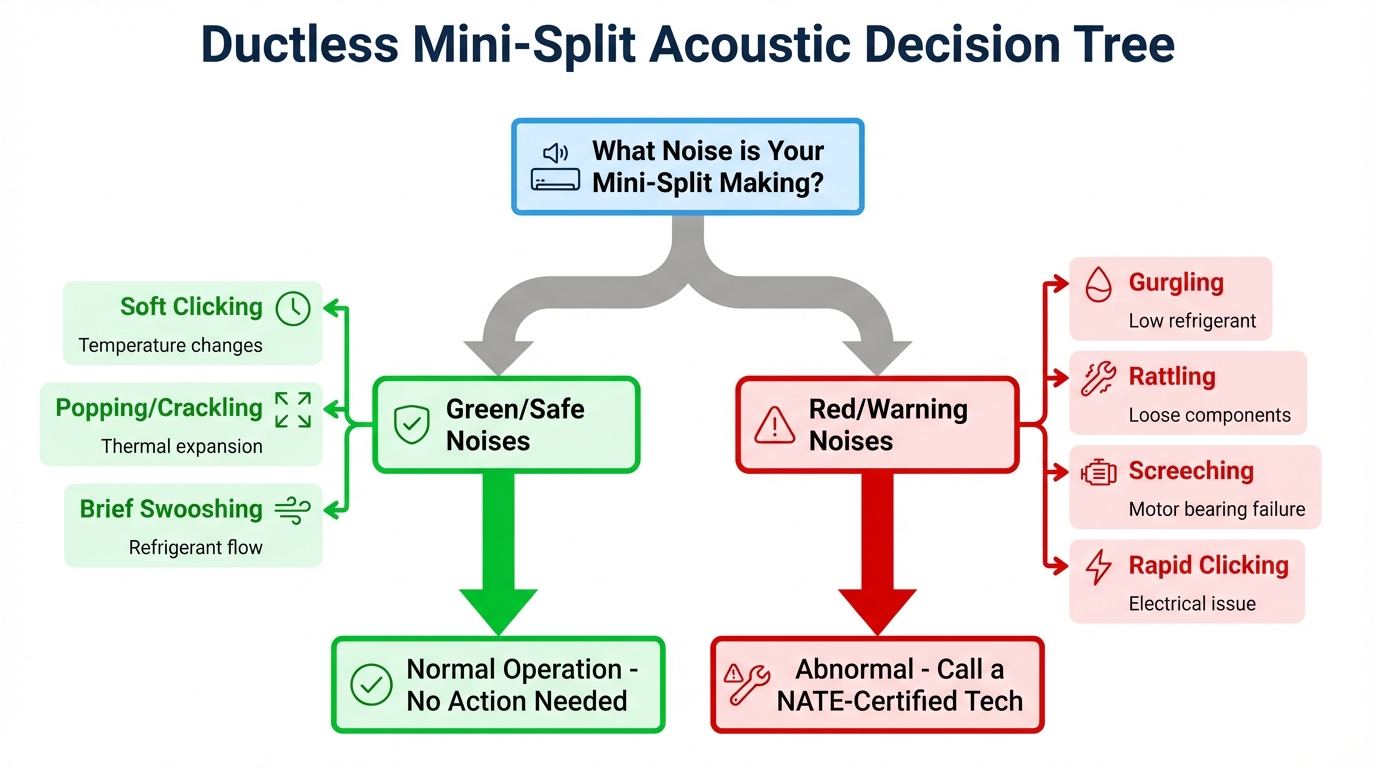
Let’s start with the reassuring news: several common sounds are completely normal and indicate your system is working exactly as designed.
Soft Clicking (On/Off Cycles)
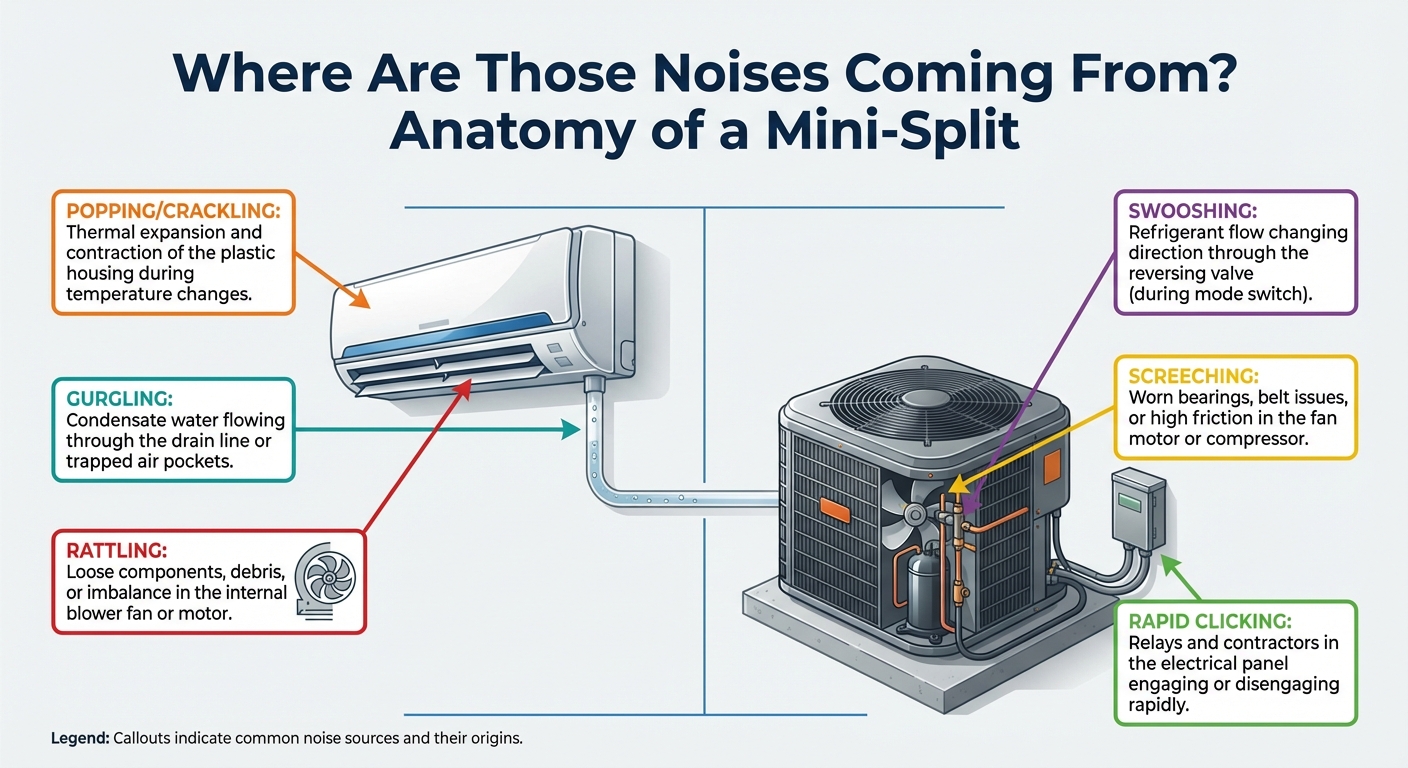
That gentle click you hear when your system powers on or off? That’s simply the sound of electrical relays engaging or motorized louvers adjusting their position. Think of it like the click of a light switch—a normal electrical operation that happens every time your system cycles. These relays are controlling the flow of electricity to various components, and the louvers are positioning themselves to direct airflow precisely where you need it.
Popping or Crackling
While this sound can be alarming—especially if you’re worried about electrical issues—it’s typically just thermal expansion and contraction at work. As your system transitions from cooling to heating mode (or vice versa), the plastic housing undergoes temperature changes. This causes the material to expand and contract, creating those popping or crackling sounds. It’s similar to the “settling” sounds your house makes as temperatures shift throughout the day.
Brief Swooshing or Hissing
This sound is particularly common during Portland and Vancouver’s damp winters. When you hear a short swooshing or hissing noise, your system is likely entering “defrost mode.” During this process, the reversing valve shifts the flow of refrigerant to prevent ice buildup on the outdoor unit—a sophisticated feature that actually demonstrates your system is working correctly to maintain efficiency in our wet climate.
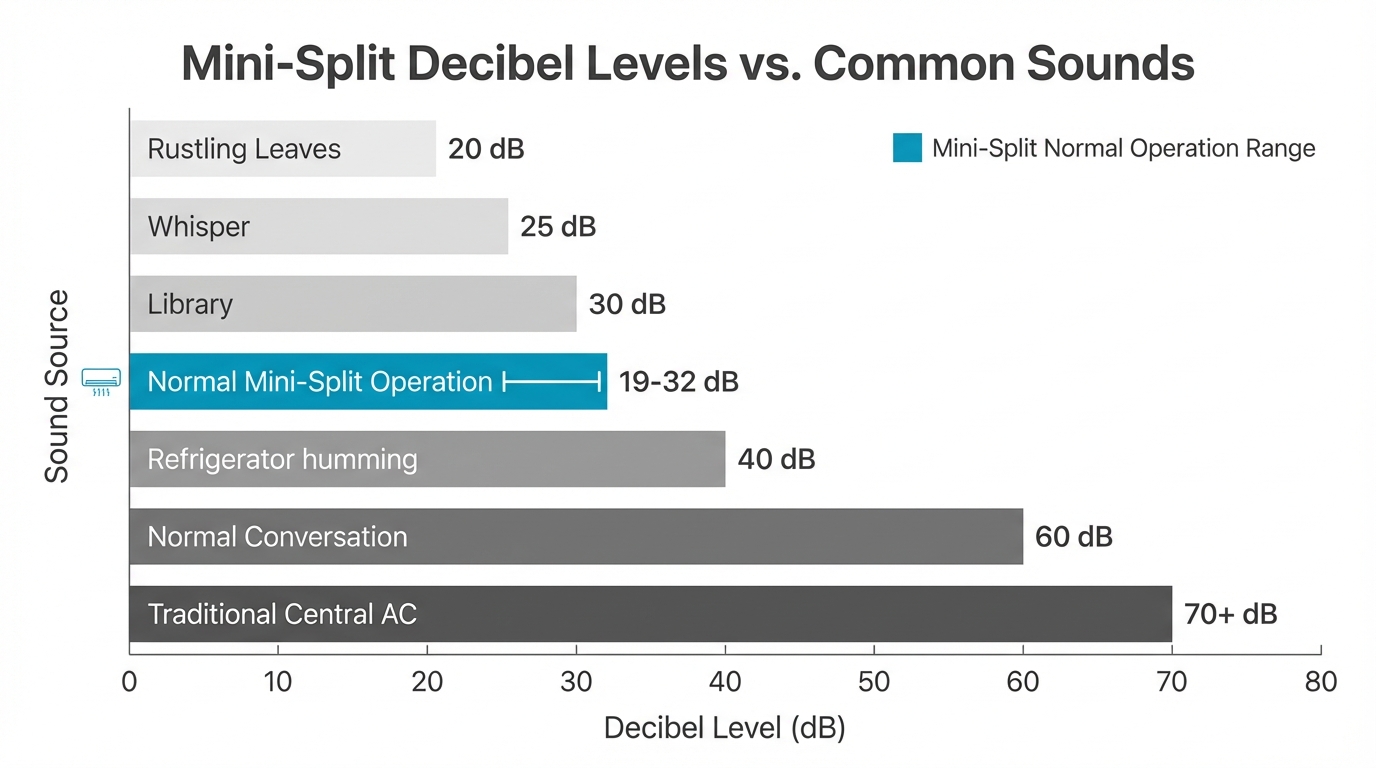
As you can see from the comparison above, your mini-split’s operational sounds fall well within the range of ambient household noises. When functioning properly, these systems are remarkably quiet—one of their key advantages over traditional HVAC systems.
Unusual Sounds That Signal Trouble (When to Take Action)
While some noises are benign, others serve as your system’s way of crying out for help. Recognizing these warning signs early can prevent minor issues from escalating into major, expensive failures.
Gurgling or Bubbling
This is one of the most common concerning sounds we encounter in the Pacific Northwest, and it typically points to one of two issues: Cause A: Clogged Condensate Drain Line — In our humid climate, this is by far the most frequent culprit. Your mini-split produces condensation as it operates, which normally drains away through a dedicated line. However, algae, mold, or debris can block this line, causing water to back up. As air displaces the standing water, you hear that distinctive gurgling sound. The real concern? This isn’t just annoying—it can lead to serious water damage. We’ve seen cases in Portland where ignored gurgling led to water dripping down interior walls, causing costly drywall repairs. The moisture creates the perfect breeding ground for mold growth inside your home. Cause B: Low Refrigerant or Air in the Lines — A more serious cause of gurgling is low refrigerant levels or air trapped in the refrigerant lines. This is critical because refrigerant loss causes your compressor to overheat, potentially leading to complete system failure. Only EPA-certified technicians can legally handle refrigerant, as these substances are strictly regulated due to their environmental impact.
Rattling or Banging
When you hear rattling or banging, it indicates loose components somewhere in your system. Common sources include:
- Loose mounting brackets on the outdoor unit
- An unbalanced indoor blower wheel (often from accumulated dust)
- Degraded installation components
While this might seem minor, ignoring rattling accelerates wear on motor bearings and can eventually lead to component failure. What starts as a $200 repair can quickly escalate to $1,500+ if left unaddressed.
High-Pitched Squealing or Screeching
This is your system’s most urgent acoustic warning. A squealing or screeching sound almost always indicates failing motor bearings—either in your indoor blower or outdoor condenser fan. We recently worked with a Vancouver homeowner who delayed addressing this exact issue. During a summer heatwave, their system’s failing bearings finally gave out, and the resulting heat buildup nearly destroyed the compressor. Early intervention would have required only a motor replacement (around $400-600), but the delay nearly resulted in a $3,000+ compressor replacement.
Continuous Rapid Clicking
This sound is distinctly different from the normal single click of a relay engaging. Continuous, rapid clicking suggests an electrical component failure—potentially a defective control board, relay, or capacitor. Beyond the mechanical concern, there’s a safety issue here: mini-splits operate on 208/240-volt circuits—more than double the voltage of standard outlets. Attempting DIY diagnosis of electrical issues poses a serious electrocution hazard.
Understanding What These Sounds Mean
| Sound Type | Likely Cause | Severity | Action Needed | Professional Required? |
|---|---|---|---|---|
| Occasional Popping | Thermal expansion | Low | None (normal) | No |
| Brief Swooshing | Defrost cycle | Low | None (normal) | No |
| Gurgling/Bubbling | Clogged drain or refrigerant issue | Moderate to High | Clear drain; check refrigerant | Yes (for refrigerant) |
| Loud Rattling | Loose components or imbalanced blower | High | Secure parts; clean blower | Yes |
| Screeching/Grinding | Motor bearing failure | Critical | Immediate shutdown; replace motor | Yes |
| Continuous Clicking | Electrical component failure | High | Inspect electrical systems | Yes |
Why Strange Noises Require NATE-Certified Technicians
While it’s tempting to troubleshoot unusual noises yourself, ductless mini-splits require specialized expertise for several critical reasons.
EPA Section 608 Compliance
If your gurgling sound stems from a refrigerant leak, federal law prohibits uncertified individuals from handling the repair. The Environmental Protection Agency strictly regulates hydrofluorocarbons (HFCs) due to their significant environmental impact. It’s not just recommended that a certified technician handle these repairs—it’s legally required. Working with refrigerants without proper certification can result in hefty fines for both the homeowner and any unlicensed technician. More importantly, improper refrigerant handling poses health risks and contributes to environmental damage.
Electrical Safety
Mini-splits operate on 208/240-volt circuits—significantly higher than the 120 volts in standard household outlets. Diagnosing that continuous clicking sound requires working with live electrical components at potentially lethal voltages. NATE (North American Technician Excellence) certification includes specialized training in high-voltage HVAC safety protocols. Our technicians understand proper lockout/tagout procedures, use insulated tools, and carry the appropriate safety equipment to work safely with these systems.
Advanced Diagnostic Technology
Here’s something many homeowners don’t realize: modern mini-splits aren’t your grandfather’s air conditioners. Today’s ductless systems use sophisticated microprocessors and computerized controls to manage their variable-speed inverter compressors. That clicking, gurgling, or rattling sound? It might be your mini-split’s way of broadcasting an error code—but only specialized diagnostic equipment can decode it. NATE-certified technicians use manufacturer-specific diagnostic tools that interface directly with your system’s control board, reading error codes that correspond to specific acoustic symptoms and mechanical issues. Without this technology, troubleshooting becomes guesswork. With it, technicians can pinpoint the exact component causing the problem, often in minutes rather than hours.
Inverter Technology Complexity
Modern ductless mini-splits use variable-speed inverter compressors, unlike older systems that simply cycled on and off. This inverter technology is what makes mini-splits so efficient—constantly modulating compressor speed to maintain precise temperature control while using minimal energy. However, this complexity means that acoustic tolerances are much lower. A rattle that might have been considered “normal wear” in an old single-stage system is a red flag in an inverter-driven unit. The continuous, variable-speed operation means any mechanical impediment creates immediate performance impacts and potential damage.
Why PNW Homeowners Face Unique Mini-Split Challenges
Living in Portland or Vancouver means your ductless mini-split faces environmental challenges that systems in drier, more stable climates simply don’t encounter.
High Humidity and Condensate Issues
Our region’s damp climate generates significantly more condensation than drier areas experience. While this is normal, it creates ideal conditions for algae and mold growth inside condensate drain lines—the primary cause of that gurgling sound we discussed earlier. In drier climates like Arizona or Colorado, homeowners rarely deal with condensate line blockages. Here in the Pacific Northwest, it’s one of our most common service calls. The combination of consistent moisture and moderate temperatures creates a perfect breeding ground for biological growth in drain lines. This is why that gurgling sound is particularly important to address quickly in our region. What starts as a minor blockage can rapidly escalate to a complete clog, leading to water backing up into your home.
Frequent Defrost Cycles
Portland and Vancouver’s winter weather creates unique operational demands. Our “chilly but not freezing” temperatures mean your heat pump triggers more defrost cycles than systems in either warmer or colder climates. When temperatures hover in the 35-45°F range with high humidity, frost accumulates on outdoor coils. Your system must regularly reverse operation to melt this frost—that’s the swooshing sound you hear. If you notice this sound regularly between November and March, your system is adapting perfectly to our Pacific Northwest weather. However, excessive defrost cycling (more than once per hour) can indicate other issues, such as low refrigerant or a failing defrost sensor.
Year-Round Operation
Unlike regions with distinct heating and cooling seasons, PNW homeowners run their heat pumps year-round. We heat in winter, cool during summer heat domes, and often use moderate heating or cooling during spring and fall. This continuous duty cycle means components experience wear more rapidly than in seasonal-use systems. Regular maintenance becomes even more critical to catch bearing wear, electrical component degradation, and mechanical loosening before they manifest as those warning sounds.
Cooling Demand During Heat Domes
Recent years have brought unprecedented summer heatwaves to the Pacific Northwest. Systems that were primarily installed for heating are now being pushed hard for cooling during multi-day heat events. This creates additional stress on outdoor condenser fans—components that may not have been designed for such intensive cooling operation. We’ve seen an uptick in squealing bearing failures during and immediately after heat dome events, as motors designed for moderate use are suddenly running at full capacity for extended periods. Understanding these regional stressors helps explain why acoustic monitoring is so important for Portland and Vancouver homeowners. Your system faces challenges that manufacturers’ national guidelines don’t fully account for.
Proactive Steps to Prevent Noise Issues Before They Start
While professional maintenance is essential, there are important steps you can take to keep your system running quietly and efficiently.
Monthly Homeowner Tasks
Clean or Replace Air Filters — Dust accumulation on filters restricts airflow, forcing your blower motor to work harder. Over time, this can lead to motor strain and that telltale rattling from an imbalanced blower wheel. Most indoor units have easily accessible filters that you can vacuum or wash monthly. Visual Inspection — Wipe down your indoor unit’s exterior and check for visible dust on vents. Look for any signs of water staining on walls near the unit, which could indicate a developing condensate drain issue before you hear gurgling. Listen for Changes — You know your system’s normal sound profile better than anyone. Trust your ears when something changes. A new sound that persists for more than a few cycles deserves attention.
Seasonal Checks
Spring — Clear debris from your outdoor unit. In the Pacific Northwest, we deal with heavy pollen, cottonwood seeds, and fallen leaves that can clog outdoor coils and restrict airflow. This restriction forces fans to work harder, accelerating bearing wear. Fall — Check your condensate drain line. Pour a cup of water mixed with a tablespoon of vinegar down the drain to help prevent algae growth. This simple step can prevent that gurgling sound from ever developing. Winter — Ensure your outdoor unit has clearance for defrost water runoff. Snow or ice buildup around the unit can interfere with proper drainage and create operational issues.
What Homeowners Should NOT Do
While there’s plenty you can safely maintain, certain tasks require professional expertise:
- Don’t attempt to open panels or access internal components beyond the air filter
- Don’t use chemical drain cleaners in condensate lines—these can damage PVC pipes and create toxic fumes
- Don’t ignore persistent new noises hoping they’ll resolve on their own—they won’t, and delay usually makes repairs more expensive
The Value of Professional Tune-Ups
Think of professional maintenance as an insurance policy for your investment. A comprehensive tune-up typically costs $150-250 but can prevent repairs costing thousands. During a professional visit, our NATE-certified technicians check everything homeowners can’t:
- Refrigerant levels and pressure readings
- Electrical connection integrity and voltage measurements
- Motor bearing condition and lubrication
- Computerized diagnostics reading error codes and performance data
- Condensate drain line flow and treatment
- Outdoor coil condition and cleaning
That Vancouver case study we mentioned earlier—where delayed action on a squealing motor nearly destroyed the compressor? Annual maintenance would have caught the bearing wear early, when it was still a quiet, subtle degradation rather than an urgent screech. We recommend bi-annual tune-ups for our Pacific Northwest clients: once in spring before cooling season, and once in fall before heating season. This schedule ensures your system is ready for its heaviest workloads. Sarkinen Heating & Cooling offers comprehensive maintenance plans that provide priority scheduling, discounted service rates, and the peace of mind that your system will stay whisper-quiet year-round. Contact us to learn more about protecting your investment.
Final Thoughts
Understanding your ductless mini-split’s acoustic language is key to protecting your comfort and your investment. Remember the fundamental distinction: soft clicking, occasional popping, and brief swooshing during defrost cycles are normal operations—your system doing exactly what it’s designed to do. However, gurgling, rattling, squealing, or continuous clicking are your system’s way of calling for help. Addressing these warning signs early prevents minor issues from becoming major expenses. That $200 repair avoided today could prevent a $3,000 system replacement tomorrow. The technical complexity of modern mini-splits, combined with federal regulations around refrigerant and the safety concerns of high-voltage electrical work, means that professional diagnosis isn’t just recommended—it’s essential. NATE-certified technicians bring specialized training, diagnostic equipment, and regulatory compliance that DIY approaches simply cannot match. For Portland and Vancouver homeowners, our unique climate adds another layer of consideration. Between year-round operation, high humidity creating condensate challenges, and recent summer heat domes pushing cooling systems harder than ever, your mini-split works harder than systems in many other regions. This makes professional care and acoustic monitoring even more critical. With proper attention to these acoustic warning signs and regular professional maintenance, your ductless mini-split will continue providing efficient, whisper-quiet comfort for 15-20 years or more. That’s the kind of long-term performance that makes these systems such a valuable investment.
Hearing a Noise You’re Unsure About?
Don’t wait for a minor issue to become a major problem. Contact Sarkinen Heating & Cooling for a professional diagnostic. Our NATE-certified technicians serve the Portland and Vancouver areas with same-day emergency service available.
Not sure if your sound is serious? Call us at your convenience for a free phone consultation—we’re here to help you make informed decisions about your home comfort system.
References:
- Northwest Energy Efficiency Alliance (NEEA). (2023). Heat Pump Technology and Market Trends in the Northwest. Retrieved from https://neea.org/our-work/heat-pumps
- Energy Trust of Oregon. (2024). Heating and Cooling: Ductless Heat Pumps. Retrieved from https://www.energytrust.org/residential/heating-and-cooling/
- American Society of Heating, Refrigerating and Air-Conditioning Engineers (ASHRAE). (2023). Technical Committee 2.6: Sound and Vibration. Retrieved from https://tc0206.ashraetcs.org/
- U.S. Department of Energy (DOE). (2024). Ductless Mini-Split Heat Pumps. Retrieved from https://www.energy.gov/energysaver/ductless-mini-split-heat-pumps
- U.S. Environmental Protection Agency (EPA). (2024). Section 608 Stationary Refrigeration and Air-Conditioning. Retrieved from https://www.epa.gov/section608